

 Translate


























The FDA’s Quality Management System Regulation now builds on ISO 13485:2016. Here is what changed, what investigators will look for, and how ENSUR supports the ISO 13485 workflows your quality system runs on every day.
The FDA’s Quality Management System Regulation (QMSR) took effect on February 2, 2026, replacing the Quality System Regulation (QSR) and incorporating ISO 13485:2016 by reference. For U.S. medical device manufacturers, alignment with ISO 13485 requirements is now part of the regulatory baseline, not simply a matter of pursuing voluntary certification.
That means choosing ISO 13485 QMS software that keeps documents, records, training, corrective and preventive action (CAPA), complaints, and audits connected and inspection-ready without adding unnecessary administrative burden.
ENSUR, DocXellent’s validated, configurable quality management system (QMS), supports ISO 13485 and FDA QMSR requirements for small to mid-market medical device manufacturers. As ISO 13485 QMS software, ENSUR helps teams manage essential quality workflows in one system while maintaining the records needed to support inspection readiness.
What changed: The FDA’s shift from QSR to QMSR
On February 2, 2024, the FDA published the final rule for the Quality Management System Regulation (QMSR), establishing a two-year transition period. The rule took effect on February 2, 2026, replacing the previous Quality System Regulation (QSR).
The QMSR amends 21 CFR Part 820 to incorporate ISO 13485:2016 and Clause 3 of ISO 9000:2015 (vocabulary) by reference. It also adds FDA-specific requirements where the standard does not cover U.S. law. Where the two conflict, the Federal Food, Drug, and Cosmetic (FD&C) Act and FDA regulations control.
Does the FDA QMSR require ISO 13485 certification?
No. According to the FDA's QMSR frequently asked questions, manufacturers are not required to obtain ISO 13485 certification, and the FDA will not issue ISO 13485 certificates. A certificate also does not exempt a manufacturer from FDA inspection.
U.S.-only manufacturers that never pursued ISO 13485 now operate under its framework, and certified manufacturers should expect FDA to look past the certificate to the records behind it.
Learn more in the FDA's QMSR overview.
What the QMSR means for medical device quality teams
The shift to QMSR brings several practical changes to how medical device manufacturers manage their quality systems and prepare for FDA inspections.
More records are open to inspection
The QMSR removes the former exemption in 21 CFR 820.180(c), so FDA investigators can now review management review, internal audit, and supplier audit records. Quality teams need to ensure these records are complete, organized, and available for inspection.
A new inspection approach
The FDA retired the Quality System Inspection Technique (QSIT). Inspections now follow Compliance Program 7382.850, a risk-based approach organized around quality management system (QMS) areas, making it important to demonstrate how quality processes operate across the system.
Risk-based thinking across the QMS
ISO 13485 expects a risk-based approach across quality processes, not only in design. Teams should be able to demonstrate how risk informs decisions in corrective and preventive action (CAPA), change control, and supplier management.
Older records still count
FDA investigators may review records created before February 2, 2026. The FDA suggests conducting a comparative analysis to show how existing records meet QMSR requirements.
New vocabulary and structure
Procedures, the quality manual, and the medical device file should reflect ISO 13485 and ISO 9000 terminology. This may require document revisions and retraining to align existing quality system documentation with the QMSR.
Electronic records rules still apply
21 CFR Part 11 continues to govern applicable electronic records and electronic signatures. Quality teams need to consider both the records themselves and the systems used to maintain them.
Quick QMSR readiness check
Consider whether any of these issues apply to your quality system:
- SOPs still reference QS regulation sections rather than ISO 13485 clauses.
- Management review and internal audit records are scattered or incomplete.
- SOP revisions do not automatically trigger retraining.
- Complaints, nonconformances, and CAPAs are tracked in separate spreadsheets or tools.
- Audit preparation means pulling records from email, shared drives, and binders.
If these challenges sound familiar, it may be time to evaluate whether your current quality system supports the workflows and records needed for QMSR inspection readiness.
What ISO 13485 QMS software should support
ISO 13485 defines what medical device manufacturers need to control, but not how to run each process. Effective ISO 13485 QMS software should support the quality workflows and records investigators expect while allowing teams to follow their established procedures.
ENSUR brings document control, training, change control, CAPA, complaints, nonconformances, and internal audits into one configurable quality management system. Administrators can configure lifecycles, forms, workflows, and permissions without code, so the system fits existing procedures.
Document control (ISO 13485 clause 4.2.4)
Investigators look for current, approved documents at the point of use and evidence of controlled changes. ENSUR supports ISO 13485 document control through a central repository, version control, review and approval workflows, electronic signatures, and role-based access.
Control of records (clause 4.2.5)
Quality teams need complete, legible, and retrievable records. ENSUR provides complete electronic audit trails and electronic records that support applicable 21 CFR Part 11 requirements.
Training and competence (clause 6.2)
Manufacturers need evidence that employees are trained on current procedures. ENSUR automatically triggers retraining when SOPs are revised and maintains audit-ready training records, including assignments and acknowledgements.
Complaint handling (clause 8.2.2)
Complaint handling requires documented, timely evaluation. ENSUR provides a complaint workflow linked to specifications and procedures, helping teams connect complaint records with the relevant quality documentation.
Internal audit and management review (clauses 8.2.4 and 5.6)
Investigators look for planned audits, documented findings, and leadership review. ENSUR supports audit activity management, scheduling, and consolidated reporting of findings, alongside real-time dashboards.
Nonconformance and CAPA (clauses 8.3, 8.5.2, and 8.5.3)
Quality teams need traceable investigations, corrective and preventive actions, and effectiveness checks. ENSUR supports these processes with configurable nonconformance forms and CAPA workflows with tiered approval.
Traceability (clause 7.5.8 and 7.5.9)
Manufacturers need to maintain traceable quality records and demonstrate the ability to link records to specific document versions. ENSUR supports identification and traceability through advanced search, static links to specific versions, and Device History Record forms. Under the QMSR, Device History Record (DHR) is legacy QSR terminology. The underlying device production recordkeeping requirements remain applicable through ISO 13485:2016.
QMS software validation (clause 4.1.6)
ISO 13485 requires validation of software used in the quality management system for its intended application. ENSUR offers a GxP-validated cloud environment with continuous installation qualification and operational qualification (IQ/OQ), annual performance qualification (PQ), and validation services. ENSUR's IQ/OQ/PQ package supports customer validation efforts, helping manufacturers fulfill their responsibility to validate the software for its intended application.
ISO 13485 QMS workflow summary
|
Workflow (ISO 13485 clause) |
What investigators look for |
How ENSUR supports it |
|
Document control (4.2.4) |
Current, approved documents at point of use; controlled changes |
Central repository, version control, review and approval workflows, e-signatures, and role-based access |
|
Control of records (4.2.5) |
Complete, legible, retrievable records |
Complete electronic audit trails that support Part 11 |
|
Training and competence (6.2) |
Proof staff are trained on current procedures |
SOP revisions automatically trigger retraining; audit-ready training records |
|
Complaint handling (8.2.2) |
Documented, timely complaint evaluation |
Complaint workflow linked to specifications and procedures |
|
Internal audit and management review (8.2.4, 5.6) |
Planned audits, findings, and leadership review |
Audit scheduling and consolidated reporting; real-time dashboards |
|
Nonconformance and CAPA (8.3, 8.5.2, 8.5.3) |
Traceable investigation, action, and effectiveness checks |
Configurable nonconformance forms and CAPA workflows with tiered approval |
|
Traceability (7.5.8, 7.5.9) |
Ability to link records to specific document versions |
Advanced search and static links to specific versions |
|
QMS software validation (4.1.6) |
Validated software for its intended use |
GxP-validated cloud with continuous IQ/OQ, annual PQ, and validation services |
With these workflows connected, quality teams can manage everyday processes and maintain the documentation needed to support ISO 13485 compliance and FDA QMSR inspection readiness.
Request a demo now to explore how ENSUR can support your quality management processes and QMSR inspection readiness.
What to look for in ISO 13485 QMS software
When evaluating QMS software for small business needs, medical device manufacturers should look beyond individual features. The software should support ISO 13485 compliance, fit your existing quality processes, and provide the flexibility to grow with your business.
When evaluating ISO 13485 QMS software, consider these questions:
- Validation: Is the software validated, and does the vendor provide installation qualification, operational qualification, and performance qualification (IQ/OQ/PQ) documentation?
- Configurability: Can administrators configure workflows and forms without code or consultants?
- Connected workflows: Do document control, training, CAPA, complaints, and audits live in one system?
- Pricing: How does pricing change as headcount, modules, or sites grow?
- Migration: What does migration from the current system include, and who does the work?
- Data exports: Can you export complete records if you ever need to move?
- Regulatory support: Does the platform support other standards and requirements you follow, such as ISO 9001 or 21 CFR Part 11?
Many quality teams reevaluate their QMS software investments at renewal. Predictable pricing and the flexibility to adapt to existing processes can be just as important as the features themselves.
How to prepare: A QMSR readiness checklist
Preparing for FDA QMSR inspections starts with understanding how your existing quality system aligns with ISO 13485 requirements.
Use this checklist to identify gaps in your procedures, records, and workflows:
- Run a gap assessment. Compare your current procedures against applicable ISO 13485 clauses to identify areas that need updating.
- Inventory inspectable records. That includes management review, internal audit, and supplier audit records that are now open to FDA inspection.
- Prepare a comparative analysis of older records. Assess records created before February 2, 2026, and document how they meet QMSR requirements.
- Confirm retraining is linked to SOP revisions. Verify that every SOP revision triggers the appropriate retraining assignments and acknowledgements.
- Verify end-to-end traceability. Confirm that complaints, nonconformances, and corrective and preventive actions (CAPAs) can be traced end to end.
- Confirm QMS software validation. Verify that software used in your quality management system is validated for its intended use, as required by ISO 13485 clause 4.1.6.
- Update terminology and train staff. Align your quality manual and procedures with ISO 13485 and ISO 9000 terminology, then train employees on the changes.
Completing these steps can help quality teams identify gaps, organize inspection-ready records, and strengthen the processes supporting ISO 13485 compliance.
Proven results and long-term support with ENSUR
With more than 30 years of document control and compliance expertise and a 99% customer retention rate, DocXellent helps manufacturers manage quality processes and maintain inspection-ready records.
Mesa Labs, a regulated global manufacturer, achieved measurable improvements across its quality operations using ENSUR:
- More than 90% reduction in audit preparation time
- 3x faster change order processing
- Document retrieval reduced from hours or days to minutes
- 95% digital adoption for document management
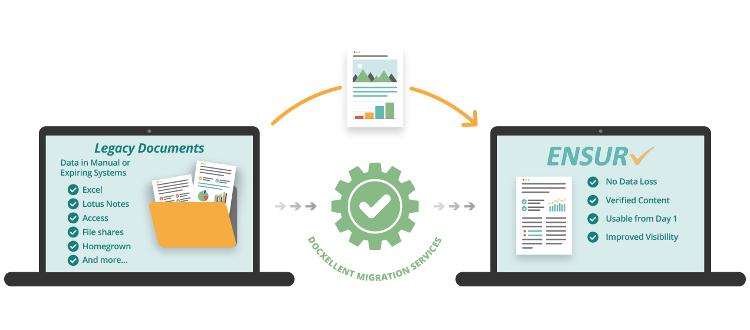
Beyond the software, DocXellent provides white-glove migration with metadata mapping and integrity checks to support the transition from existing systems. U.S.-based customer support helps teams manage their quality system after go-live.
Together, these capabilities and results demonstrate how ENSUR supports everyday quality operations while helping manufacturers prepare for regulatory inspections.
FDA QMSR and ISO 13485: Frequently asked questions
What is the FDA QMSR?
The FDA’s Quality Management System Regulation (QMSR) governs quality management systems for medical device manufacturers. It amends 21 CFR Part 820 to incorporate ISO 13485:2016 and Clause 3 of ISO 9000:2015 (vocabulary) by reference and adds FDA-specific requirements where the standard does not cover U.S. law.
When did the QMSR take effect?
The QMSR took effect on February 2, 2026, following a two-year transition period after the final rule was published on February 2, 2024. It replaced the previous Quality System Regulation (QSR).
What is the difference between the QSR and the QMSR?
The previous QSR established FDA-specific quality system requirements under 21 CFR Part 820. The QMSR incorporates ISO 13485:2016 by reference, aligning FDA quality system requirements more closely with the international standard while retaining FDA-specific requirements.
Does the QMSR require ISO 13485 certification?
No. The FDA does not require ISO 13485 certification and will not issue ISO 13485 certificates. Having a certificate also does not exempt a manufacturer from FDA inspection.
Can FDA inspect internal audit and management review records under the QMSR?
Yes. The QMSR removes the former exemption under 21 CFR 820.180(c), allowing FDA investigators to review internal audit, management review, and supplier audit records. Manufacturers should ensure these records are complete, organized, and available for inspection.
Does 21 CFR Part 11 still apply under the QMSR?
Yes. 21 CFR Part 11 continues to apply to electronic records and electronic signatures within its scope. Medical device manufacturers must continue to address applicable Part 11 requirements when maintaining electronic quality system records.
What should ISO 13485 QMS software include?
ISO 13485 QMS software should support document control, records management, training, complaint handling, internal audits, management review, nonconformance, CAPA, and traceability. The software should also be validated for its intended use and provide configurable workflows, electronic audit trails, and records that support FDA QMSR inspection readiness.
Build lasting QMSR inspection readiness with ENSUR
With the FDA QMSR now in effect, ISO 13485 alignment is the regulatory baseline for U.S. medical device manufacturers, and more quality system records are open to inspection.
A connected, validated quality management system is the most reliable way to maintain inspection readiness.
ENSUR supports ISO 13485 compliance by bringing document control, training, CAPA, complaints, and audits together in one configurable system.
Request a demo to see how these workflows work together in ENSUR.
For more information, explore our FDA 21 CFR Part 820 and ISO 13485 compliance resources, or read 8 Tips to Help Meet ISO 13485 Standards.